Matterialism

There is a fundamental question: Does any of it matter?
There are three possible answers.

  1. Nothing matters.
  2. Some things matter, and some don’t.
  3. Everything matters.

The world where nothing matters is a world of infinite entertainment and dopamine hits. Where we chase novelty and fun, just for the heck of it. It is the hedonistic treadmill on steroids, spiraling into the most ornate emptiness imaginable. There is always something more meaningless to explore.

Then there is the world where some things matter, and some don’t. It is the world of highlights and shadows. Parts of that world stay hidden, even though they are not going anywhere. The trouble here is that it’s exceptionally difficult to distinguish between the two. What can you safely ignore?

Finally, a world where everything matters. How can we even begin to comprehend such a thing? It is a world where every part is connected to everything else. In this world, by virtue of something existing, it immediately matters. It matters what we think, what we do, what we value, how we love, how we create, how we compose ourselves, how we treat each other and the world at large. It is a world where every moment is sacred, because it all adds up. It is a world where every day we fail to rise to the challenge, but we try anyway, because it matters. It is a world where nothing is ever lost.

The choice is yours… and your decision could actually matter quite a bit.

Disrespecting Yourself

You disrespect yourself when you do or say something that’s not in line with:

1) Your values
2) Your feelings

Note that your stories are not in that list, because they change all the time. In fact, they may need an update.

But your values don’t really change that much. If you value love, then not acting from love is disrespecting yourself. If you value truth, then not speaking it is disrespecting yourself.

Your feelings are more fleeting. They will change from moment to moment. But, keeping in mind your values, can you honor those moments? Can you act in alignment with how you feel? When you do, you may sacrifice the consistency of your stories, but you will honor and live by what’s truly alive in you.

Perhaps it’s time to start respecting yourself. What’s the worst that could happen? And, more importantly: what’s the best that could happen?

The Threefold Crisis

At the end of 2023, I made the mistake of exploring the topic of climate change. I read writings by folks like Jem Bendell (who wrote the Deep Adaptation paper) and Dougald Hine (who wrote the Dark Mountain manifesto), and got sucked into doomscrolling on Reddit. As a result, I became “Collapse-aware“, which dragged me into a mild existential crisis. Then, in early 2024, I had to close my company. My old life as a videogame entrepreneur came to a grinding halt, resulting in a “hard reset” of my working life and potentially my personal life as well.

I set out to answer two questions:

  1. What is actually going on
  2. What am I going to do now

The answer to question 1 is that we find ourselves in a “poly crisis” that, in my view, can be traced down to three root causes, and the answer to question 2 is to fix those root causes in my personal life. I wrote this essay to structure my thinking and to spark dialogue and possibly some constructive actions. I am happy to report that it indeed helped with the former goal, and I hope it will succeed with the latter goal.

TLDR: The world as we know it is in early stages of collapse. There is simply no scenario where everything will be as it used to be. Our lives will change significantly in the decade ahead: we have peaked on comfort and convenience. But there is some good news too. There are many people working to preserve and restore what deserves to be preserved and restored. I have found that the Regeneration and Eco Village movements are growing stronger every year. These people are actively working on a different way of living, and they are forging a way forward for the rest of us. I believe that the root causes for many of the problems we see today are plain and simple: we disconnected from our hearts, the land we live on, and our local communities. In order to improve our circumstances, both personally and regionally, we can reverse it: Connect to our heart, connect to the land, and connect to our local community. This creates more resilience, independence and sustainability. It means going back to basics, back to what’s actually real.

The poly crisis

Let’s start with where we are now. The world today is facing a poly crisis. This is a term coined by Adam Tooze and covered in many publications and books. In short, we are part of an intricate global machine with many moving parts. This machine is growing every day, and it works like magic – until it doesn’t. When part of it stops, the effects can be dramatic. Think of the blockade of the Suez canal in 2021, which blocked $9.6 billion worth of trade every day and disrupted 12% of global trade. Like the Suez canal, there are several other key systems that make this society-machine work. Several of those systems are at risk of disruption, and in several cases the disruption has started already.

For example, our food security relies on crop harvests, and harvests rely on predictable weather. In the past 20 years, extreme weather events have risen 75% compared to the 20 years before. We see floods in the sahara desert, tropical temperatures in the arctic, draughts and wildfires across the globe and all kinds of unpredictable weather in general. This increases the risk of a “multi breadbasket failure“, which is an event where several key crop-producing regions fail to deliver. This could impact the food security of billions of people, resulting in suffering, social unrest and geopolitical tensions.

Other areas that could trigger disruptions are geopolitical fault lines, a slowing global economyincreasing energy needs, dependency on critical minerals, and political polarization causing social unrest.

These are just some examples. The poly crisis is here, because there are several potential points of disruption, each with their own set of dependencies. Collapse, in this way, might not be a linear process: If something breaks, the cascading effects can be wildly out of proportion. In other words, when things break down, it is likely to be faster than expected and worse than expected. The COVID-19 pandemic is a good example, which caused rapid global lockdowns and disruptions, affecting billions of people.

Three Pillars

The list of dependencies goes on and on, and it’s easy to get lost in the ocean of scientific reports and scary news stories. But you don’t need the news to see what’s happening right in front of you. As I look around, talk to people, and reflect on my own life, there is a sense that “something is wrong”. The world is getting more complex and unpredictable, there is more tension in the air, and we seem to be poorer than before. Something is clearly wrong, but it’s not clear what that something actually is, because the symptoms are so complex and varied.

I simply want to find a better way forward for all of us, so I am not interested in a rational or scientific analysis of the state of the world. We need wisdom, not data points. So I tried to get to the root cause of the issues, to identify what we can work with today to improve our lives and environment. Immediately, three core issues emerged. These root causes are very close to home, and as a modernist city dweller I am “guilty” of all of them. That’s good news, because means there is potential for improvement in my life and most likely in the lives of folks living a similar life as myself. I also suspect they hold the keys to solve many of the world-scale issues we’re dealing with, although at that scale it would take a critical mass of adoption that’s beyond my wildest imagination. The good news: we don’t have solve the global poly crisis. Taking small steps like these makes us (and our immediate environment) more resilient to deal with whatever comes our way.

I believe the three areas to focus on are:

  • The connection to our Heart
  • The connection to the Land we live on
  • The connection to our local Community

These three pillars are foundational for a good life, and they bring resilience and sustainability with them. To the extend that we have lost connection with them, it is now time to restore these connections.

The Heart

The first pillar is the connection to the Heart. It is the most fundamental part of our being, our core essence. Are you in touch with your true self? Are you in touch with your feelings? Are you in touch with the empathy and compassion? Those parts of yourself that appreciates beauty and connection? Are you in touch with your soul, your spirit? With the sacred? Do you experience meaning, purpose and self-worth in your life?

When we live in our heads most of the time, our brains tend to create (or imagine) as many problems as they solve. We tend to get sucked into dopamine escapism, whether it is through substance abuse, digital media, or any other addiction of choice.

We can see this crisis in the world through rising consumerism, nihilism, polarization, ideology, depression, and authoritarianism.

So it is time to reconnect to our hearts. There are many approaches to do this. Sometimes it’s good to take a step back from your daily life and go on a holiday in nature or a retreat, even if it’s only for a few days. It can also be smaller and more immediate: I have found journaling, listening to music and nature walks to be a big help. Then there are a myriad of spiritual practices, ranging from meditation to things like singing circles, psychedelic ceremonies, and ecstatic dance. Just do something. Anything at all. All the little things add up, and no honest effort is ever lost.

The Land

The second pillar is the connection to the Land. This is the ground we stand on, the lands that provide our food, water and fresh air. Are you in touch with nature, with the weather, with Mother Earth? Are you exposed to the elements? Do you have plants in your home? We are inextricably part of the natural world and depend on it for our physical and general wellbeing. When you buy food (and semi-food) from the supermarket, you don’t know where your food and water comes from. This cut you off from the circle of life.

This crisis can be seen by the loss of ecosystem resilience and climate change in general. Sure, we can keep some of it at bay by hiding in airconditioned city apartments, but the closer we get to nature, the more obvious it becomes that things are not all that well with Mother Earth. Storms, wildfires, draughts, floods, coral bleaching, mass extinction events – the ecosystems that we depend on for our food and general wellbeing are at risk. It will not be long before we will clearly see the effects in our wallets (rising food prices) and bellies (your favorite foods running out of stock).

We need to reconnect to the land and restore our relationship with nature. It doesn’t need hectares of wild forests (although that wouldn’t hurt). It means living closer to the seasons, going outdoors, experiencing the weather, working with the land and creating some resilience. Growing and processing our own food is very much possible (indeed, 70% of the food worldwide is grown in the “peasant network” for self consumption). It is also a powerful step towards autonomy and resilience. Become the guardian of a piece of land, even if it’s a tiny back yard, indoor mini-garden or rooftop terrace. Work it, live from it, and nurture it so that it is part of the greater ecosystem. We need healthy soil and good biodiversity, in cities as much as in the countryside. Working with Permaculture principles and general Regeneration practices will achieve just that.

The Community

The third pillar is the connection to our Community. Are you in touch with our neighbors? Are you taking part in the local fabric of life? Do you give help and ask for it? We may have many distant “friends” online, but nothing can replace the real-life conversations and rituals that form long-lasting relationships. In many places, the institutions for community have crumbled. Where I’m from, the church and the community centers were the public spaces where people came together to share all of life. Today, many public spaces are struggling. Offices, schools and “social” media are the modernist alternative, but they are poor substitutes for a vibrant local community.

Sadly, it is a rare and precious neighborhood where people get together regularly and know each other. As we live online, in a world of fancy words and pretty pictures, we alienate ourselves from the real world that’s directly around us. Our workplace may provide some sense of belonging, but it is colored by the needs of the business. We need to sing, dance and make music around a fire – this is not just something silly but a core human need that goes back thousands of years.

As we reconnect to our community, we reconnect to the reality of being human. As social animals, our relationships define us: our peers are mirrors of our souls. As we prioritize local friendships, we can become less dependent on online connections. This has a big benefit: Online, we are beholden to the whims of billionaires and big tech corporations. Their algorithms favor “engagement”, which breeds polarization, the creation of content bubbles, and addiction.

Offline, we can connect across age, interests, ideas and anything else based on one simple fact: We live here, now. Let’s meet each other in that place.

Slow down, fast

The solution to these three crises come down to one thing: We need to re-establish connection to reality. Not some out-there-someday “reality” filled with data points and projections. Not some online “reality” of picture-perfect lookalike peers and virtual worlds. This is about the realness of being present with what’s going on at this very moment at this very place.

We have a massive poly crisis on our hands, and like it or not, our life will change dramatically in the next decades. I, for one, believe that more technology is not going to save the day. We’re not going to innovate our way out of this mess. But while we can’t stop these changes, we can choose how to prepare and respond to them. We need to slow down, fast. This is an invitation to reconnect to what’s real. Resilience, joy and sustainability are a pleasant side-effect of it – but fundamentally, it’s about getting real about what’s right, and then doing that.

The good news is that, wherever you are, you can make a change, right now. You can take a deep breath and become aware of your heart, your feelings. You can become aware of the food you’re eating and the land you are living on – and perhaps take care of a plant or two while you’re at it. You can do a digital detox and invite your neighbor for a cup of coffee and a chat. These things you can do today, and it will 100% make today a bit better.

I am a city-dweller, guilty of most of the “accusations” outlined above. But I know the way forward is not more of the same. I will grow and adapt as time proceeds, doing the best I can, even though it will never be enough. I’m starting to reconnect to the heart through music and singing. I’m on the hunt for a place to live closer to nature. And I’m reconnecting with my local communities by volunteering and helping local initiatives. No matter the crisis, I know these pillars will hold.

I am curious to hear your thoughts!

With love and respect,
Derk

Music Is Medicine – Singing Circle

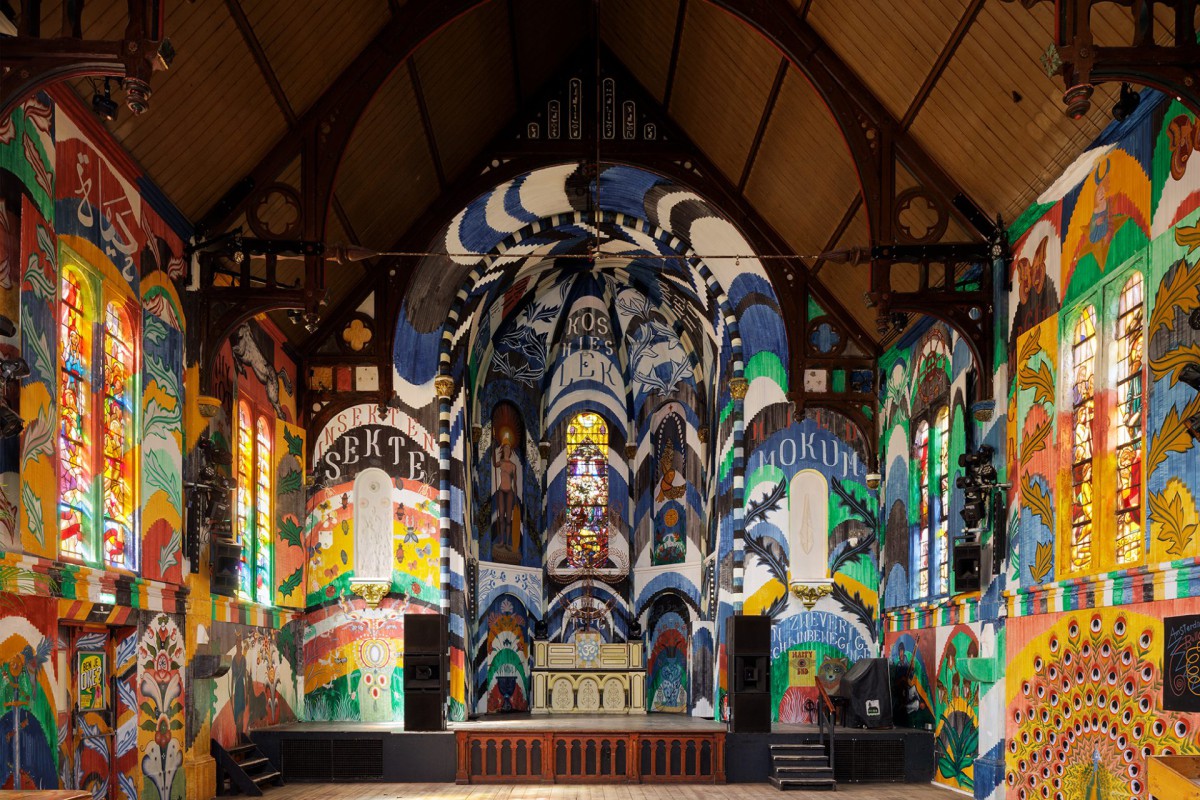
On February 8, we gather in the awesome church of Ruigoord in Amsterdam to experience the healing power of music and singing in harmony. Together we honor the power of the circle and of singing together. Connected from the heart, connected to each person’s unique sound and voice. This is medicine.

The circle is led by Michael Sheiran, Ralf Hekkenberg, Derk de Geus, Atmani Blok, Wendy Maarse and Myra Tierra.

We will be playing original songs and classic heart songs from around the world. I am really looking forward to this awesome event – with these artists and this location, you simply can’t go wrong. See you there!

Tickets and info: https://hipsy.nl/event/94346-muziek-is-medicijn-zangcirkel

-Derk

Breath of the Forest – new track out now!

TLDR: New track! Out now! Get it on your favorite streaming platform here.

The backstory

After releasing my debut track, Back To Zero, I quickly started on the next one. What was simple jamming at first, quickly became a struggle – I ended up trashing half a dozen tracks because they were all just not up to snuff (and believe me, this is not just some crazy perfectionism!). I wanted to do better than the last release, but kept failing at it, and it was becoming increasingly frustrating. There were moments when I just wanted to give it all up… it simply wasn’t working out. All in all, it took me several months and a ton of willpower to break through that imaginary wall.

Breath of the Forest started as a completely different song. I started from scratch several times, leaving only some of the synths and other instruments intact. Up until the last moment the song was not quite there – it simply lacked energy and something special, even though I liked the basic ethereal arpeggios and the vibe of the song. So at the very end of the process, I added the big drum kit that smashed everything into place. Finally it had the energy and the epic feeling I was going for.

Breathe!

The track takes inspiration from something called “breathwork”. There are many types of breathwork, the most famous one being the Wim Hof method. The breath is an incredibly powerful tool to achieve altered states of consciousness, and breathwork sessions helped me to go deep inside to explore the inner world. This is a tool to deal with difficult moments – literally breathing through them. I also love the deep relaxation and peace that washes over you after an hour of intense breathing.

In the sessions I attended, the music was a powerful driving force behind the practice. In some cases the tracks have been created specifically for breathwork (for example by the awesome Dutch producer Joep Mencke) and in other cases they simply match very well to the experience (one of my all-time favorites is the song “Says” by Nils Frahm – I’m sure you’ll hear the inspiration for this track). In all cases, there is a certain energetic quality to the songs that take you higher – they send shivers up your spine, and it is that feeling that I wanted to capture with Breath of the Forest.

Forest bathing

Apart from breathwork, I also aimed to capture the sense of awe that I feel on my adventures out in nature. Especially after meditation or breathwork sessions, when you pay attention, the forest is clearly alive and breathing ever so subtly. The leaves rustling in the wind, the gently moving branches of the trees – present and unmoving, yet flowing with subtle energies all the way down into the earth, where they literally connect with each other to form the ancient entity we call the forest.

These experiences leave me in awe of nature and being alive. It is this awe, this deep appreciation of the whole, that I hope to convey in the song – even if it’s just capturing a tiny fragment of it, and just a humble attempt at that.

I hope the song serves you well – it is best enjoyed when you’re relaxed, and in a perceptive state. Turn up the volume, perhaps take some deep breaths throughout the track – you never know what realms might open up for you!

Listen to Breath of the Forest here.

Enjoy 🙂

-Derk

First steps on a new journey – Back To Zero

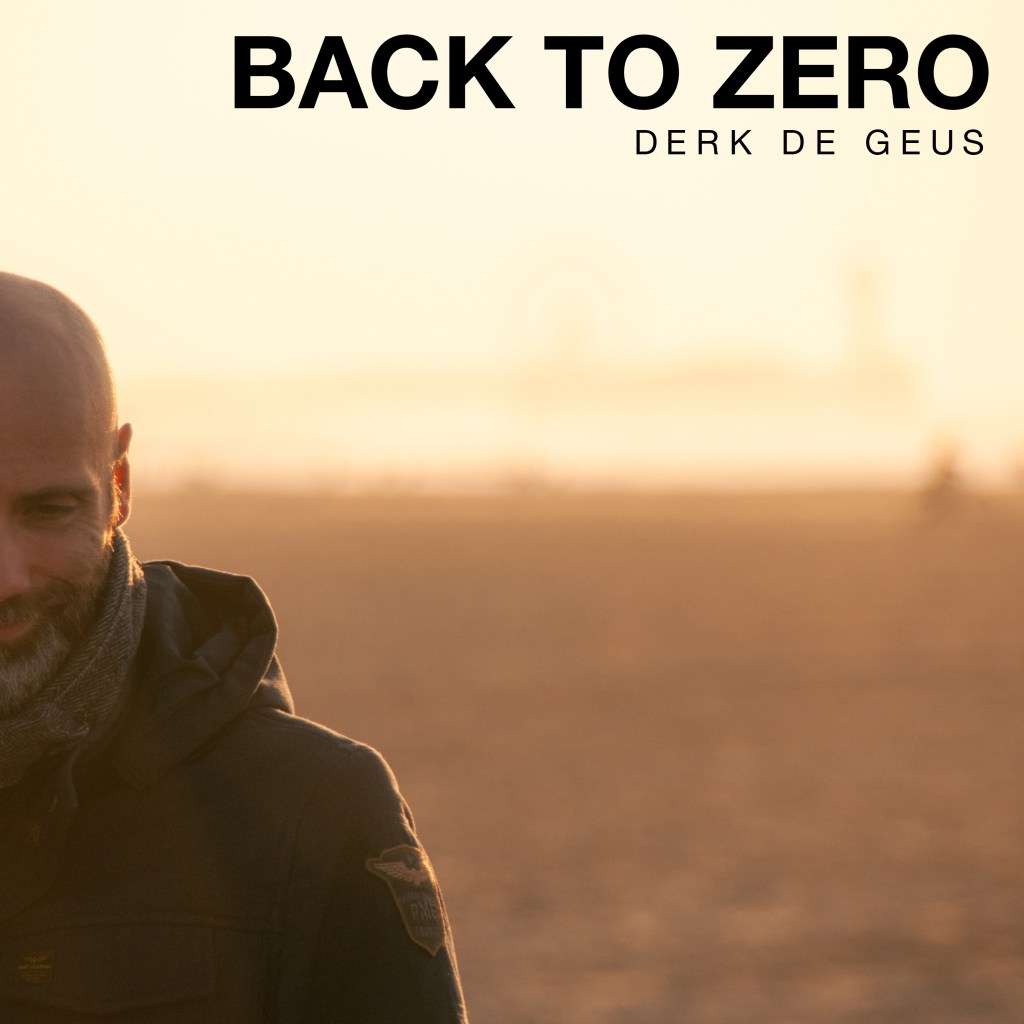
Today marks the release of “Back To Zero“, my debut track:

(Shameless plug: It’s out on Spotify and other platforms!)

I’ve been making electronic music since I was 9 years old, and it helped me through the tough times in my life. Starting with ModEdit, then Scream Tracker, then Impulse Tracker, then Reason – these tools enabled me to lose myself in music and rhythms.

Back in the days, I would make hip hop beats and rap and sing. After a while, life happened and I ended up choosing a different path: Games. When I started Paladin, my game studio, I had a big vision of building an awesome game studio and working on great projects. This vision took a decade to materialize, and as I was bootstrapping it was a rough ride to get there. Throughout these years I poured my heart and soul into this company, and I am proud and honored to see what the studio is today.

As the studio grew and grew, peaking at close to 60 people last year, my role as a founder changed quite drastically. Being the CEO of a 7 people team is one thing, being the CEO of a 60 people team is quite another. The people were great, the games were great – I loved this company and still do. However, I started resenting the excel sheets and meetings – the endless array of management stuff. And when things seemed to be looking up up up, I realized that the thought of “more of the same” was terrifying. I was heading for a burn-out.

After some serious introspection, I decided I needed to make a sharp turn and hand the reigns over to someone else. I needed to break free from the cage that I’ve built around myself, the cage in which I was complying with my own standards and beliefs about how to do things. So I fired myself, hired a CEO, and went off the radar.

I finally had time for more reflection and introspection. But before the magic started to happen, first I got in the way of things.

The first thing I was drawn to was music. I would make tracks for two weeks in a row, and I couldn’t be happier. However, something was nagging – the tracks were not up to my quality standards and I got very frustrated very fast.

So I dropped music again, saying “this is not for me – I just had to get it out of my system, now it’s time for something else”. This time, I was going to make a game. I really like programming, and this time I kept it up for several months, tinkering away at a little game.

However, not all was right in the realm. I was quite happy, but slowly the doubts started to creep in. Did I really leave my game studio to fend for itself, only to make games by myself? Was that truly my calling? Furthermore, the studio needed me. Not in my old way of working where I would be managing day-to-day stuff, but in a new way. They didn’t need me as a King Arthur, but they did need me as a sort of Merlin the Wizard.

So I went back to support the executive team. There was trouble brewing and we needed to put in a lot of effort to set things straight in order to survive. But after a few months, when the dust settled, we got to a point where things were on track and we found a great “triforce” with the executive team. My role: To safeguard and nurture the vision, the “soul” and the magic of the company.

With that clearly defined role, I had time again to do… something else. And with my “game making fix” covered with my involvement in the studio, I realized that music was the thing. No matter my skills, no matter all the doubts, no matter my limiting beliefs – I felt very clearly this calling to make music, to use it as a catalyst for lighting a fire in the world. I don’t know what that fire is yet, but I know it has to do with my creative journey.

So to make a long story short: It started with confusion. Only when I looked into the darkness, into the empty void of pure creative potential, I could feel that I was approaching my deeper purpose.

To illustrate this, I’d like to share an experience when scuba diving in Bali. We dove across an underwater cliff edge. The darkness that was looming in the deep ocean was terrifyingly beautiful. The void of creative potentiality evoked a similar feeling in me. It’s pure potential and pure terror.

There is no tool, no trick, no gadget, no shortcut that can avoid it. The only way is INTO IT. But once there, the Great Force is with me. I played with it, learned to let it work through me. My music improved as a result.

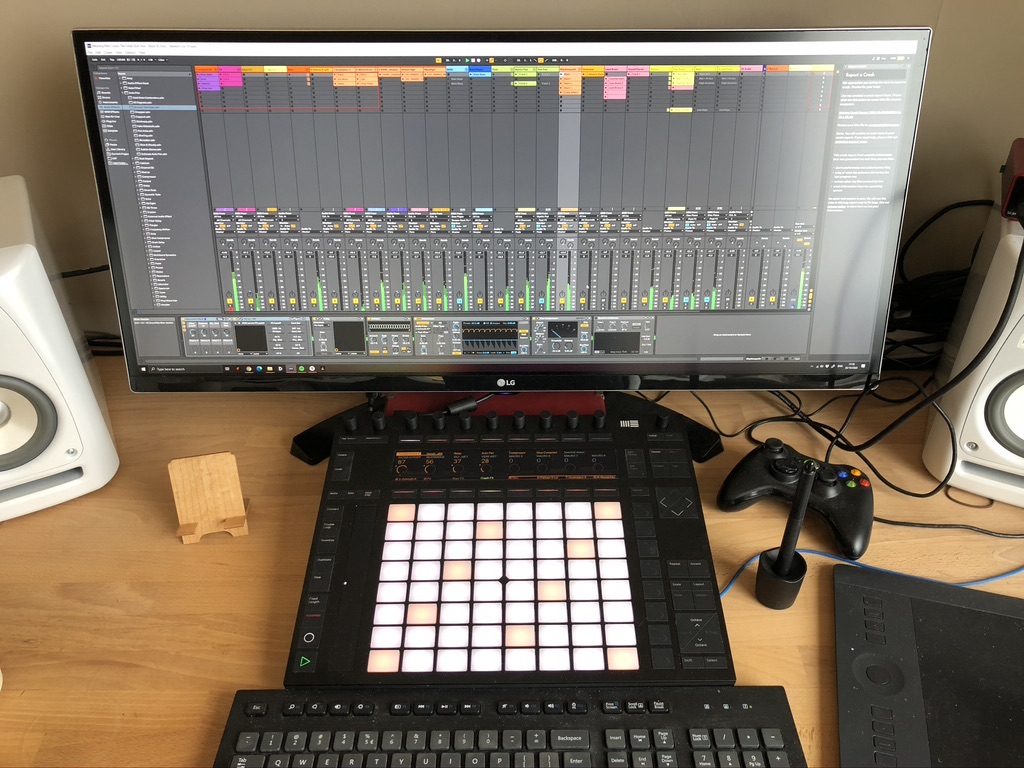
My music battle station right now.

There’s much more to share with you, so I’ll post more of these stories along the way. For now you’re invited to have a listen to my track on your favorite platform here!

Enjoy, and see you around 🙂

-Derk

7 Journaling Questions That Will Make Your Day

My morning routine revolves around three things: Meditation, Exercise, and Journaling. This is part of a series of posts where I explore these topics in detail. Let’s begin with Journaling.

I get stuck on a daily basis. As I write this, I’m on a roll with exercising – yesterday I went surfing and the day before I had my first Krav Maga training. This is a big thing for nerdy me – finally I’m gaining some traction to get in shape. Therefore, now is a great time to binge on marshmallows! I now feel the pain in my stomach from a dozen of those evil little fluffbombs. Piercing their hearts with wooden spikes and setting them on fire is a great start, but I should have let them burn instead of eating them. That escalated quickly.

Journaling is the tool to spot my own bullshit and keep it together.

By writing about my inner turmoils, I get to make a bit more sense of the world and myself. So whenever I’m angry, happy, or overwhelmed, my journal is the place I write it all down. This does a couple of things:

  1. I get it out of my system. The stories need to go somewhere, and when they’re black-on-white, they’re no longer in my head.
  2. I get more clarity. When I articulate what I feel, I am more in touch with my emotions, and I am also taking a small step back to reflect. This distance allows me to deal with the feels.
  3. I find solutions come automagically from writing about the problems.

All of this is has a big impact on my state of mind.

Pro tip: Journaling in the morning is especially effective, because it allows you to set the tone for the day. Morning routines benefit from the “primacy effect”: the things you do in the morning resonate throughout the day ahead.  Have a double espresso in the morning, and you will feel the effects into the day.

Question prompts

I have developed a set of questions for my morning journaling practice. These questions nudge me into the mindset of gratitude and appreciation, and they challenge me to make the most of the day ahead. They provide me with a simple and consistent practice, which resonates throughout the days and years. Yes, years: My entries from a year ago pop up in my journaling app, and I find it incredibly valuable to read about the things that kept me busy in the past. If you spot recurring themes and patterns, you can use that knowledge for goal setting, habit formation and wellbeing tactics.

Example: A decade-long recurring theme for me is “I need to exercise more”. My journaling makes me aware of the severity of this problem, which prompted me to make this my top priority.

The Seven Questions

Without further ado, here is the full list of questions:

  • What’s going on?
  • What’s going well?
  • What am I grateful for today?
  • What did I learn recently?
  • What would make today excellent?
  • What virtue can I practice now?
  • How can I do the most good in the world?

As you can see, they are simple and straightforward. You can answer this whole list in 5 minutes (although I usually take about 15 minutes just to go a bit deeper.)

Let’s go over the questions one by one, to explore the “why” behind them.

“What’s going on?”

First, get all the stuff out of your head. Write down what’s going on, anything that buzzes and that you’re busy with.

This gets the noise out of the way, and primes you for the remaining questions. Think of things like “Finished this book”, “had a nice breakfast this morning” or “I can’t stand my boss and don’t want to go to work today”. Anything goes, don’t think about it too much, just make it a brain-dump of all the stuff happening in your life right now. And yes, feel free to vent here – it’s fine to get the crap out of your system before you move on to the good stuff. In fact, I believe that venting in a contained space is a healthy catharsis, so go for it!

“What’s going well?”

Next, zoom in on the things that are going smoothly.

The things that go well indicate that you are “in the zone” for that particular topic. High fives and fist bumps! Good stuff is happening here, and that deserves some thought and appreciation. These items hint at your skills and proficiencies, which is useful to be mindful of when going about your day. And perhaps there’s a hidden hint to your life purpose buried in the answers here, especially if you notice recurring themes.

Importantly, appreciating your strengths (or luck) lifts spirits. Which primes you for the next one, gratitude, and that’s where the real magic happens.

“What am I grateful for today?”

Gratitude is a solid shortcut to happiness.

This is the heart of the list, the most important question to answer. If you do nothing else, ask yourself this question daily. It will level up your wellbeing like nothing else (except perhaps meditation).

Take a moment to reflect and appreciate the things in your life that you are grateful for. Make this gratitude list as long as you want, and I recommend to mention at least three things.

Pro tip: On top of simply listing these items, live the experience in your mind. For example, I might write down that I am grateful for my surfing lessons. As I write that down, I then also take a brief moment to visualize being on the board, seeing the sunset, feeling the waves, tasting the salty water in my mouth and feeling my surge of happiness that comes with it. Get those good vibes going!

Sometimes, it can be hard to come up with anything to be grateful for. If that’s the case for you, then the small things can save the day. For example, consider being grateful for taking a moment to do a gratitude and reflection exercise, or the fact that you are able to breathe and that your heart is pumping. Even if this seems trivial, just take a small moment to reflect on it, write it down, and then continue your day. Know that this practice is powerful, even when you’re going through a rough patch in life.

Note: If you show signs of depression, please reach out to a professional for one-on-one support. Sometimes a journal simply isn’t enough to save the day. 

“What did I learn recently?”

This question primes you for the more forward-thinking questions that are coming up. You are on a journey, and if you become aware of things you’ve learned, then that can give you key insights into your path and direction.

Your skills and experience are incredibly valuable, and your continued (self) education is the most important investment you can make. By reflecting on the things you’ve learned, you will be more aware of your growth areas, and gain deeper insight into those topics. A big part of learning is memory and recall – so writing down the things you’ve learned will solidify these lessons. Here are some pointers:

  • What have you observed recently?
  • What are you reading or listening to? Did you take anything away from it?
  • Did someone give you interesting feedback recently?
  • Did you have a new kind of experience recently?
  • Did you have any shower thoughts recently?

Writing down what you’ve learned accelerates your education dramatically.

“What would make today excellent?”

For this question, name one thing that you want to accomplish today, or that you’re looking forward to. The anticipation of this act or event will prime your brain to accomplish it, and enjoy it more when it occurs. Furthermore, anticipating the good stuff is a mood booster!

I’d like to challenge you here to think of things that are at least partially within your control, so that you can act on it and make it happen. While “winning the lottery” would make a day excellent, you will set yourself up for disappointment if you rely too much on external events.

Don’t make this a To Do List. List one thing only, so that you focus your attention on it and set yourself up for success. Then during the day, focus your efforts on the one thing that would make the day excellent. Get that one thing done!

“What virtue can I practice now?”

Anticipate the challenges for the day, and how you are going to tackle them.

By preparing yourself this way, you are better equipped to face the trouble coming your way. Which virtue will help you move gracefully through the daily grind? What virtue do you think you’ll be able to practice today? Or put differently, “how are you going to effectively deal with all the bullshit today?”.

Pinpoint the specific virtue that you need now – be it patience, courage, love, persistence, or anything else. By calling it out, you mentally rehearse using this virtue.

Pro tip: Bonus points for articulating how accessing that virtue will impact you and others, and in which specific situations you intend to use it.

As with the previous question, I recommend you list only one item here. Focus is a virtue!

“How can I do the most good in the world?”

Last, but not least, this question challenges you to connect your actions to a deeper purpose in your life.

This question is a catalyst for deep reflection and sustainable transformation. There’s a good chance that your answers will repeat themselves over the weeks and months. For example, for a long time my answer was “be the best leader I can be”. However, sometimes the pattern changes over time, and every time you ask yourself this question you will get more clarity on not just your bigger mission in life, but also how to effectively act on that mission right now.

Name the one thing that you can actually do that will make the biggest positive impact in the world – even if it’s a small thing with limited reach. Write it down, try it out, and see what happens.

Tips for Getting Started

Start today: Even if your day is almost over, I challenge you to start today. Take a pen and piece of paper, or open up a text editor, and write down the questions and answers. You might be surprised at what comes out.

Build a habit: A consistent practice will give you exponential benefit. Start small, set a timer, and do it every day, ideally at the same time and place. No worries if you skip one day, just get back on the horse and keep going. Like any habit, it might take about 2 months to sink in and become automatic.

Use a journaling app: I use “Day One” as my journaling tool of choice. There are plenty of alternatives, but I found this app a while back and stuck with it. There’s a free version and a paid version. There are plenty of alternatives, just see what works for you. Even just a plain text editor or note taking app will do the trick, just make sure you back it up somewhere. And of course the ultimate journal is the pen-and-paper book next to your bed. I personally keep a small notebook and pen next to my bed for night time journaling, and do the more long form morning journaling digitally.

Use a shortcut for fast entry: I use a text expander called “TypeIt4Me” to create fast template entries. This allows me to type “grat;” and the questions automatically pop up in the right formatting. It saves me from typing the questions over and over again. For a low-tech option, you can also save a text file with the questions, and then copy-paste that into your journaling app. And apps like Day One also provide templates for prompts like this.

Take time in the mornings for this: Like a good cup of coffee, journaling in the morning will allow you to reap the benefits throughout your day. I like to make coffee and then sit down with my coffee to journal.

If you can only do this in the evenings, then that’s fine. The gratitude question is still a good question to ask, and you can adapt the other questions to night time. For example, ask yourself “What would make tomorrow excellent” and “What virtue can I practice tomorrow”.

Keep it short and sweet: Especially in the beginning, I recommend you take about 5-10 max and start with small answers. Seven questions can be a lot, so starting small will allow you to build the habit over time. Don’t be too hard on yourself, just write down what comes to mind and let it go. There is no right or wrong answer to any of these questions, and your insights will evolve over time. Just do what feels right for you, as long as you actually do it.

Good luck, have fun, and let me know how this goes!